
Relief but caution is the order of the day, counsels the Harvard Crimson’s Megan Blonigen and Jona Liu: “Harvard’s Funds are Back. Can Its Scientists Trust the Government Again?”
The real question for Harvard’s scientists should be: Do we want the funding back? The answer to that question should be “no.”
For several decades, our colleges and universities have been the main characters of a classic tragedy, of hubris stalked by nemesis, marching toward an inevitable doom that everyone, save that main character, sees coming.
The latest act of this tragedy turns on the Trump administration’s withdrawal of substantial amounts of federal research funding from several prestigious research universities, Harvard among them. For Harvard, that amounted to a $2.6 billion hit in terminated grants and contracts. As this act unfolded, Harvard immediately sued to recover that money. In September, a federal court found in Harvard’s favor, and by October, $46 million from the National Institutes of Health (NIH) landed back in Harvard’s coffers, with more set to return. End of act. Curtain down. Intermission. Refreshments in the lobby.
What will the next act bring?
[RELATED: Short Take: Science Has a Publicist]
The Harvard Crimson article features reflections of several of Harvard’s prominent scientists on their experiences with the recent funding disruption. Here is the synopsis: We are doing so much good in the world, our work is so virtuously motivated, our lives have been so needlessly disrupted, and we’ve had to go to extraordinary lengths to pick up the pieces. We are heroes, betrayed.
This is hubris personified. It is worth noting that hubris is not arrogance; it is pride that blinds the main character from his inexorable march to doom. There is nothing unlikeable about any of the scientists whose stories Blonigan and Liu tell. They are justly proud of what they do, and of their devotion to science. As someone who spent a multi-decade research career in a never-ending scramble for funds and living with perpetual uncertainty, I feel their pain.
Nevertheless, they are in the grips of a prideful delusion: that they are valued as scientists, that the funding, privilege, and prestige they enjoy have been conferred on them so that they might advance science, and that what they do is valued by their universities as science. They are blind to the reality that they are galley slaves, chained to the oars, valued not for the science they do nor for their good intentions, but for the revenue streams they generate.
Doubt me on this? Here’s a thought experiment. Decide to dedicate your career to an intellectually promising line of inquiry that doesn’t cost much money to pursue, or even better, that can be funded without grants. What do you suppose will happen to your academic career? Here’s my hypothesis: you will soon have no academic career.
And where is nemesis in all this? Pull away the mask, and her identity is revealed. Nemesis is the mighty river of federal research funding, roughly $100 billion that streams into universities nationwide every year. (See my Rescuing Science). That money doesn’t just support research. Approximately a third of it funds the growth of a network of rent-seekers, bloated academic administrations, a near monopolistic concentration of academic publishing in three massive publishing houses, and politicians always eager to deliver goods to powerful academic interests in their districts. None of these interests cares about science. Like all rent-seekers, they care about securing and aggrandizing money, power, and influence. Science is no more than the means to that end.
The result has been a transformation of the entire ethical landscape of the academic sciences.
Before World War II, when federal spending on academic science was minuscule, an ethic of discovery prevailed. The landscape of career incentives then turned on the discovery of new knowledge, and this cultivated a flourishing culture of basic science. Since then, scientists’ careers are increasingly shaped by an ethic of production: how many papers published, how many grant dollars won, how many PhDs graduated? Discovery is now subordinate to oxymoronic metrics of “scientific productivity.” Academic scientists now labor under a set of perverse incentives that have reduced them effectively to serfdom.
[RELATED: The War on mRNA—Apocalypse Imminent?]
How did the sciences come to this tragic denouement? Hubris led them there. Following WWII, the federal government embarked on an unprecedented experiment in federalizing academic science. Since 1950, federal and state governments have dominated academic research spending, accounting for 60 percent to 80 percent of an exponentially growing stream of revenues. At some universities, nearly their entire research portfolio is funded by just four federal agencies. This has transformed academic science into a near-fully-owned subsidiary of the government.
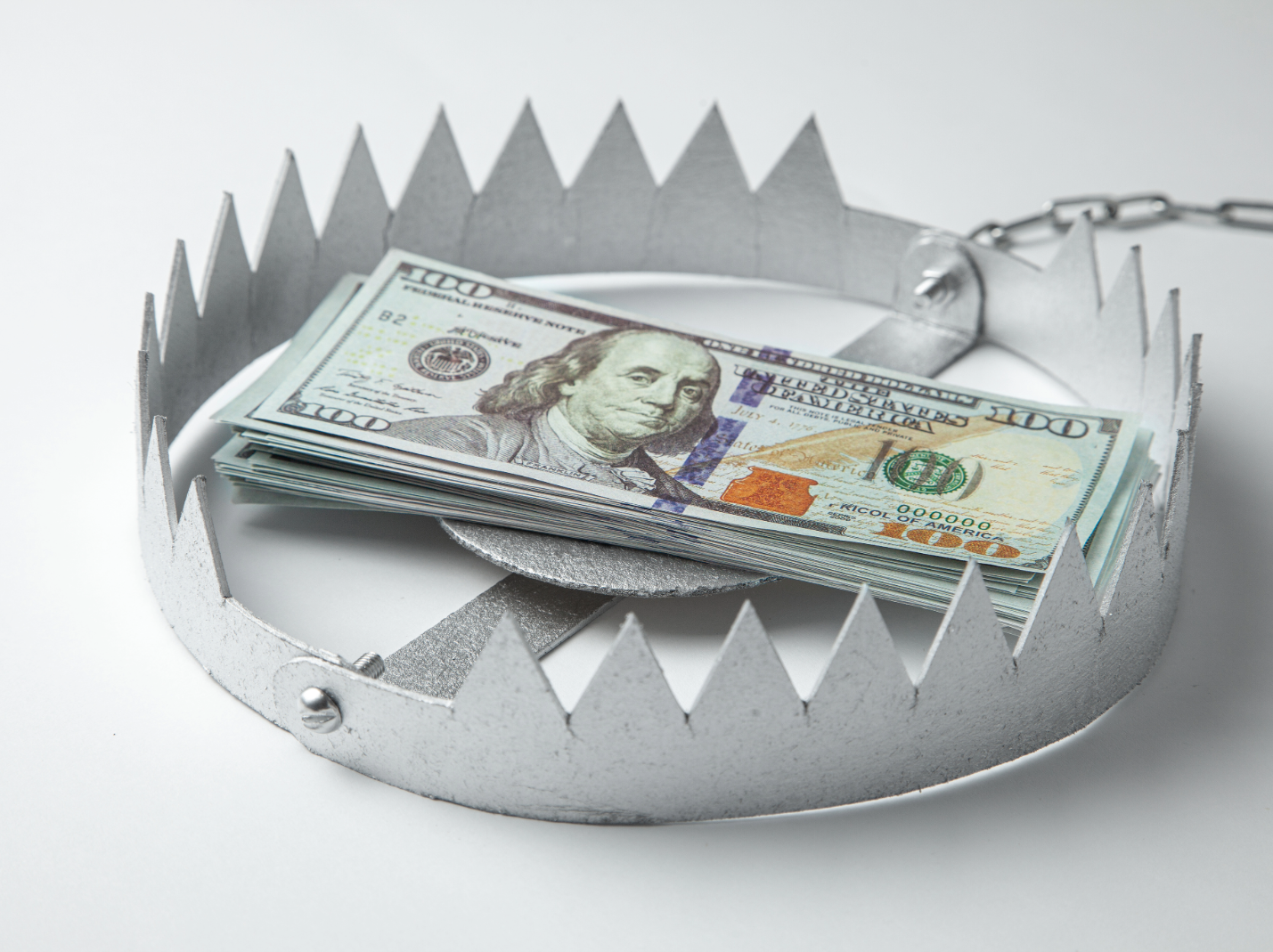
Recent laments of the Trump administration’s alleged politicization of science thus ring hollower than a lead pipe. The academic sciences politicized themselves in 1950, when their soul was sold in exchange for federal research dollars. The only thing that changed in 2024 was a shift in the political winds. Hubris has blinded scientists to their real nemesis: the federal research spending that they lamented losing last year, and then welcomed back in October. It is enslavement to federal research dollars that is driving their tragic march to their inevitable doom. They have walked right into the trap.
If this were a Hallmark movie, the last act would complete the classic hero’s journey. The scales would fall from the eyes, and the academic sciences would pluck up the courage to spurn the false “affections” of their fickle and conniving “research partner” and reclaim their independence and freedom.
I’m not holding out for a happy ending, though. This is a tragedy, not a romance.
Image by adragan on Adobe; Asset ID#: 271381028

I am an “Independent Researcher” and have been for 25 years for the reason well described by Dr. Turner.
I say again: the “research” university was the product of a unique period of American history — the 50 years war (1941-1991). The Berlin Wall fell in 1989 which was when the war was largely over — and when the problems in American higher education largely began.
The research university model has its origins in Bismarck’s Germany, and which was imported into the US in the latter 19th century, with the establishment of Johns Hopkins University, The research university model quickly spread through the American higher ed ecosystem.
The dilemma for the German research university was preservation of academic autonomy and intellectual freedom against the enlistment of academic science to the service of the state. The American research universities handled this pretty well up to the mid-2oth century, largely by keeping government at arms length.
That all changed in 1950, which federalized the academic sciences, boosted later by the Sputnik panic, fully enlisting the academic sciences in service to government.
I know that the “right” answer is the German model arriving in the latter 19th Century — and it did — but I’m not so sure that it had the influence it is given.
Now my background is public institutions — the A&M mission of the Land Grant College, the elementary school teacher production of the Normal School — and all of the public institutions I am familiar with started as one or the other. And I know almost nothing about John Hopkins — we could both be right.
Either way, I argue that it was December 7, 1941 that changed things — and not just with the Manhattan Project, which I believe was officially under the auspices of the University of California. It’s difficult to tell because much of this was classified at the time and remained so during the subsequent Cold War, but there was MIT (a Land Grant College) and work with both microwaves and RADAR which became Lincoln Labs, the US Army’s clothing/equipment research in Natick, MA, etc. I believe that Albert Einstein, then of Princeton, was involved in trying to figure out why the USN torpedoes weren’t working — I forget who it was that figured out that the firing pin was bending and needed to be stronger.
The Serviceman’s Adjustment Act of (I believe) 1944 — aka the GI Bill — offered free college educations to veterans to keep them out of the workforce. The concern was that the economy had been totally converted to war production and without time for it to convert back to civilian goods (and the women to get pregnant), there would be a glut of unemployment that would be worse than the depths of the Depression.
Sputnik was 1957 and it was more what we need to do now — a realization that we needed to have rigor in our high school STEM courses, and that we needed to train teachers qualified to teach these subjects in the high schools. This is where the PSSC Physics curriculum came from — something which couldn’t be taught to most college undergrads today.
(And remember that universal public high school itself was a new thing back then — in much of the country, education had ended at the 8th grade with tuition prep schools for those who wanted to go further.)
And then the Higher Ed Act of 1965, part of LBJ’s “Great Society”, created Financial Aid and the great largess of Federal money — and the Vietnam-era draft serving as an incentive for young men to go to college.
The other thing to remember is that college professors didn’t really start making real money until the 1980s & 1990s. This was true of teaching in general, people in it enjoyed being in it and realized that they could make a lot more money in industry, but chose not to go there.
The 1930s was, of course, the Depression — but even before then, colleges and universities were frugal. People didn’t get paid much, there wasn’t much money.
They kept the FEDERAL government at arm’s length but at least public institutions were very much political entities of the state, and the private ones were more tied to their benefactors than today. Should we be surprised that Stanford was known for railroad technology?
The other thing to remember is that Trump 47 is the first President to effectively challenge Big Education. The government was regulating it since at least the 1970s (when Education was part of HEW) but no one complained because the government was advocating the agenda of the Tenured Radicals.
Title IX, Affirmative Retribution, Social Justice — a lot of that was implemented because of the implicit (sometimes explicit) threat of ED/OCR.
It’s only now that the tide has turned and the vocal activists don’t like the Federal agenda that people are upset. Are professors willing to go back to teaching 4 classes a semester, every semester, in addition to their research?
I will listen to the great scientists, with and without Nobel prizes, concerning government funding of science. Rather than this guy who has always struck me as a loser dreamer of little note or success.
B. Hussain Obama, who went through Hellfire missiles like a frat boy through beer, has a Nobel prize. Trump, who actually appears to be ending wars, doesn’t.
Enough said?
My concern is with Nobel prizes in sciences.