The Foundation for Individual Rights and Expression (FIRE) has released new polling data that offers one of the clearest snapshots yet of how students think about speech after the assassination of conservative activist Charlie Kirk. Between October 3 and 31, 2025—just weeks after Kirk was shot and killed while speaking at Utah Valley University—FIRE surveyed 2,028 undergraduates nationwide. Their answers to questions about free speech suggest a campus culture where the line between expression and violence has grown dangerously blurred.
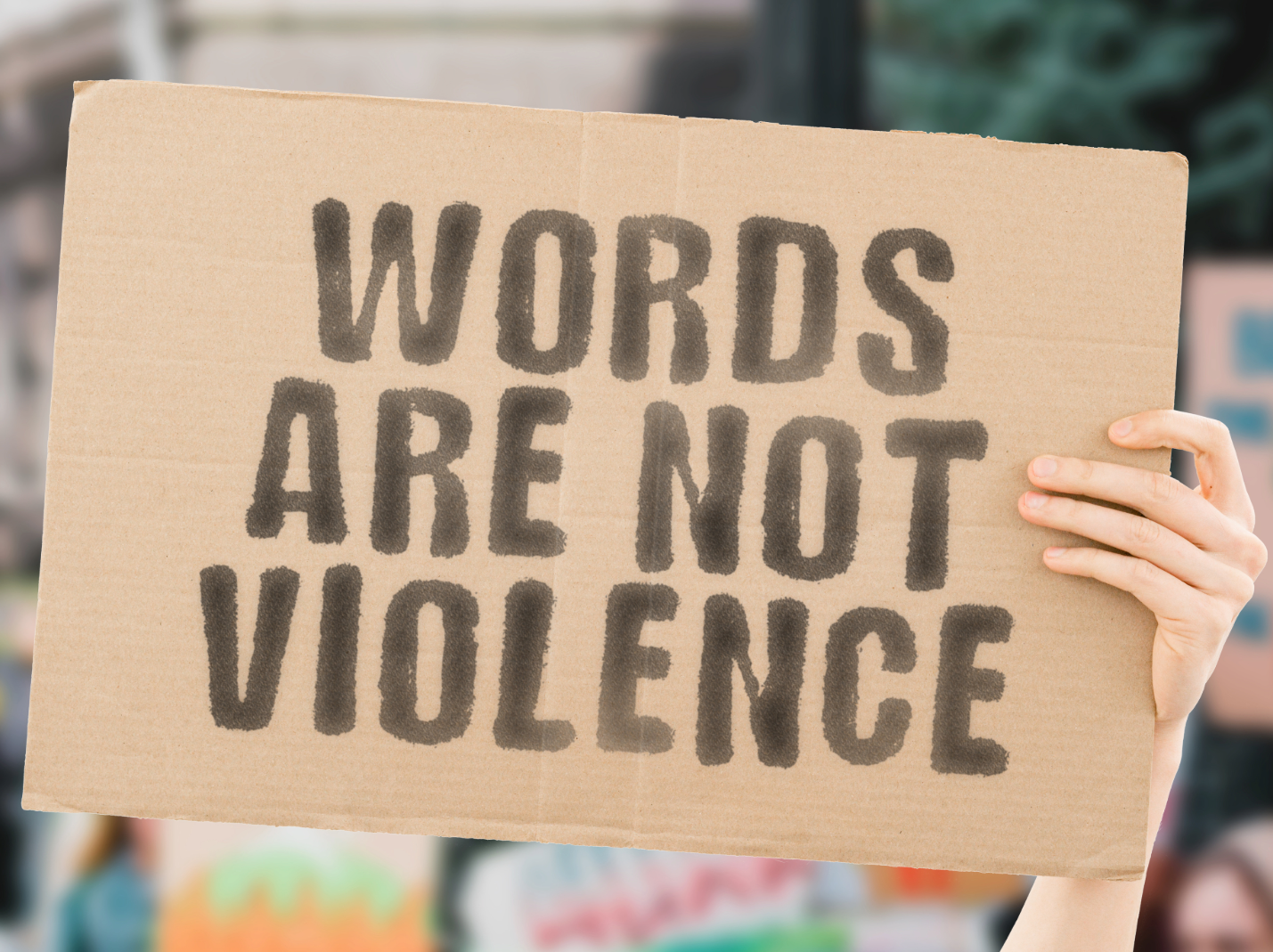
Ninety-one percent of students surveyed said that “words can be violence,” and seventy-nine percent agreed that “silence is violence.” These views remained widespread even among students responding shortly after an act of literal political violence carried out on a college campus. If any moment might have clarified the distinction between speech and physical force, one would think it would be the assassination of a speaker whose only “weapon” was his voice. Yet, the event did little to shift the underlying belief that expression itself can constitute harm—a belief that rests on the erosion of the basic distinction between words and force, a distinction that makes open inquiry possible.
The fallout from the assassination did produce measurable changes in student attitudes toward disruptive tactics. FIRE found that moderate and conservative students became significantly less likely to say that shouting down speakers, blocking events, or using violence are acceptable responses to objectionable speech. Liberal students, however, showed no similar movement; support for these tactics held steady or even rose slightly. Instead of a universal recoil from coercive behavior, the assassination seems to have widened the ideological divide in how students judge the legitimacy of shutting down speech.
These figures fit into a longer pattern that FIRE has been documenting for years: a steady rise in students’ suspicion of open debate and a corresponding willingness to treat speech as actionable harm. Bias-response teams, expanded definitions of “safety,” and the routine use of trigger warnings have helped normalize the idea that emotional discomfort is incompatible with campus life. The new polling now confirms that these attitudes have not softened—even when students confront the reality of political violence.
The broader trend lines deepen the concern. In FIRE’s 2026 College Free Speech Rankings, 166 of the 257 institutions evaluated received a failing grade for their overall speech climate. Record numbers of students now say it is acceptable to shout down a speaker (71 percent), block entry to an event (54 percent), or use violence to stop a speech (34 percent). That last figure marks a 50-percent increase since 2020, when one in five students held that view. If nine in ten undergraduates believe speech itself can be violence, and if one in three believes real violence can be an acceptable answer to objectionable speech, then the conditions for future conflict are already in place. What has shifted is not the presence of provocative ideas but the cultural understanding of what offense means and what it justifies.
The newest poll also documents a sharp rise in self-censorship following the assassination. Nationwide, 45 percent of students say they are now less comfortable expressing their views in class, 43 percent in common campus spaces, and 48 percent on social media. One in five reports feeling less comfortable even attending class. The effect is especially stark at Utah Valley University, where 86 percent of students say free expression in America is headed in the wrong direction and one in three now self-censors multiple times per week. These are not isolated reactions; they reflect a campus culture that has long been teaching students that their emotional responses determine the boundaries of discourse and that disagreement itself can be a form of injury.
[RELATED: FIRE Overstates Conservative Censorship on Campus]
None of this emerged by accident. Universities have spent years normalizing the idea that discomfort is danger—treating protected speech as a disciplinary issue and insulating students from challenge. Those habits helped produce the attitudes FIRE now documents: a long-term shift toward viewing disagreement as harm. The implications are clear in the polling. When the line between words and violence blurs, suppressing speech can be cast as self-defense and coercion as moral duty. Students worry about political violence—53 percent say it’s a problem across ideological groups—yet many embrace frameworks that make it easier to justify.
FIRE’s report captures not a sudden rupture but the maturation of attitudes that have transformed campus norms. The data show a rising suspicion of open debate, a growing willingness to use coercive tactics, and a profound confusion about the difference between ideas and actions. These are not just campus trends; they are civic trends. A society cannot sustain democratic life if emotional discomfort is treated as a political emergency, and the university cannot fulfill its purpose if disagreement is classified as harm. Recovering the basic distinction between speech and violence is not a technical matter. It is a foundation of free inquiry—and one of the most urgent intellectual tasks facing higher education today.
Image by AndriiKoval on Adobe; Asset ID#: 390685518