
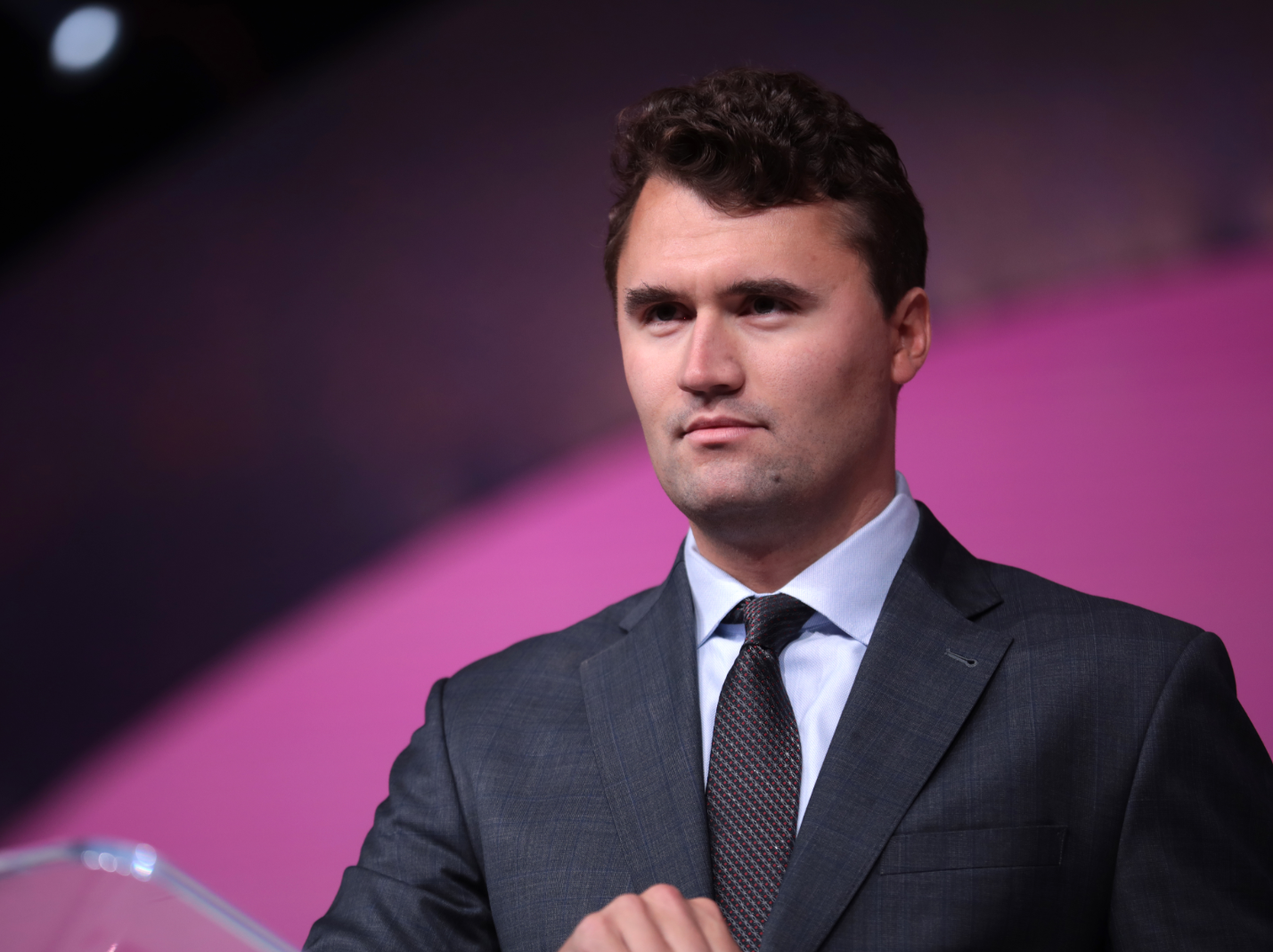
In September, political activist and Turning Point USA founder Charlie Kirk was assassinated on Utah Valley University’s (UVU) campus while debating students. His death drew widespread media attention, with many offering condolences to his family, while others reacted with open hostility. Among leftist extremists, his killing was celebrated as a “deserved” consequence of his conservative, Christian views. And the hostility didn’t stop on campus: at one Starbucks location, a leftist employee wrote “racist” on cups when a customer ordered Mint Majesty Tea—Kirk’s favorite drink.
These reactions reveal how deeply some on the left have come to view dissenting speech not as something to debate, but as something to silence. Kirk’s assassination underscored this shift: for his ideological opponents, his views were perceived not as arguments to rebut but as offenses that justified shutting down his right to speak.
The left’s posture against free speech has been building for years. Leftist activists have long stretched the term “hate speech” to cover opinions that merely contradict their ideological norms. And higher education institutions have adopted that logic, using it to squelch those who dissent from leftist orthodoxy. In 2022, a theatre professor at Southern Utah University was sanctioned after a student filed a Title IX complaint alleging “discrimination” and “harassment” for declining to use gender-neutral pronouns. The professor—who agreed to use the student’s preferred name—argued that compelled pronoun use violated his First Amendment rights. The lawsuit was still ongoing as of March.
Yet, in the weeks following Kirk’s death, there was an unexpected turn on the political right: a growing willingness to punish those who made insensitive or hostile remarks about the assassination. And several colleges have sanctioned professors for making offensive public remarks, celebrating, or excusing Kirk’s assassination.
[RELATED: Why Charlie Kirk’s Mockers May Get Their Jobs Back: The Mike Adams Precedent]
Emory University School of Medicine recently fired Associate Professor Anna Kenney for Facebook remarks in which she called Kirk a “disgusting individual” and responded to another post about the assassination with “good riddance.” Emory’s leadership condemned “any celebration or incitement of violence,” though Kenney’s comments—while reprehensible—did not call for violence. At California State University, Fresno, a lecturer was placed on leave after being recorded saying it was “too bad” Kirk wasn’t dead. Fresno is not an outlier. Several universities have taken similar action against faculty who made harsh or inflammatory remarks about Kirk’s assassination, and the Foundation for Individual Rights and Expression (FIRE) now lists 29 open cases involving faculty disciplined for such comments.
Although these remarks were offensive, punishing them risks embracing the same censorial logic that conservatives have spent years fighting. Given the routine censorship aimed at the right, some may welcome these penalties as overdue symmetry. But the principles conservatives invoke when their own speech is targeted apply just as forcefully here. Offensive speech is still protected unless it crosses the narrow legal thresholds of defamation, incitement, or true threats—standards these remarks do not appear to meet. Ignoring that fact erodes the very protections conservatives depend on.
Yes, there are legal distinctions to consider. Public universities are bound by the First Amendment; private institutions are not, though they remain contractually responsible for any free speech guarantees they advertise. Emory, as a private institution, may have more leeway to discipline faculty—depending on how its own policies are worded.
But despite these nuances, one thing stands out to me: counter-censorship is not a path to preserving free speech. If conservatives hope to defend free expression with credibility, they must defend it consistently—even when the speaker is someone they find reprehensible.
Image: “Charlie Kirk” by Gage Skidmore on Wikimedia Commons