
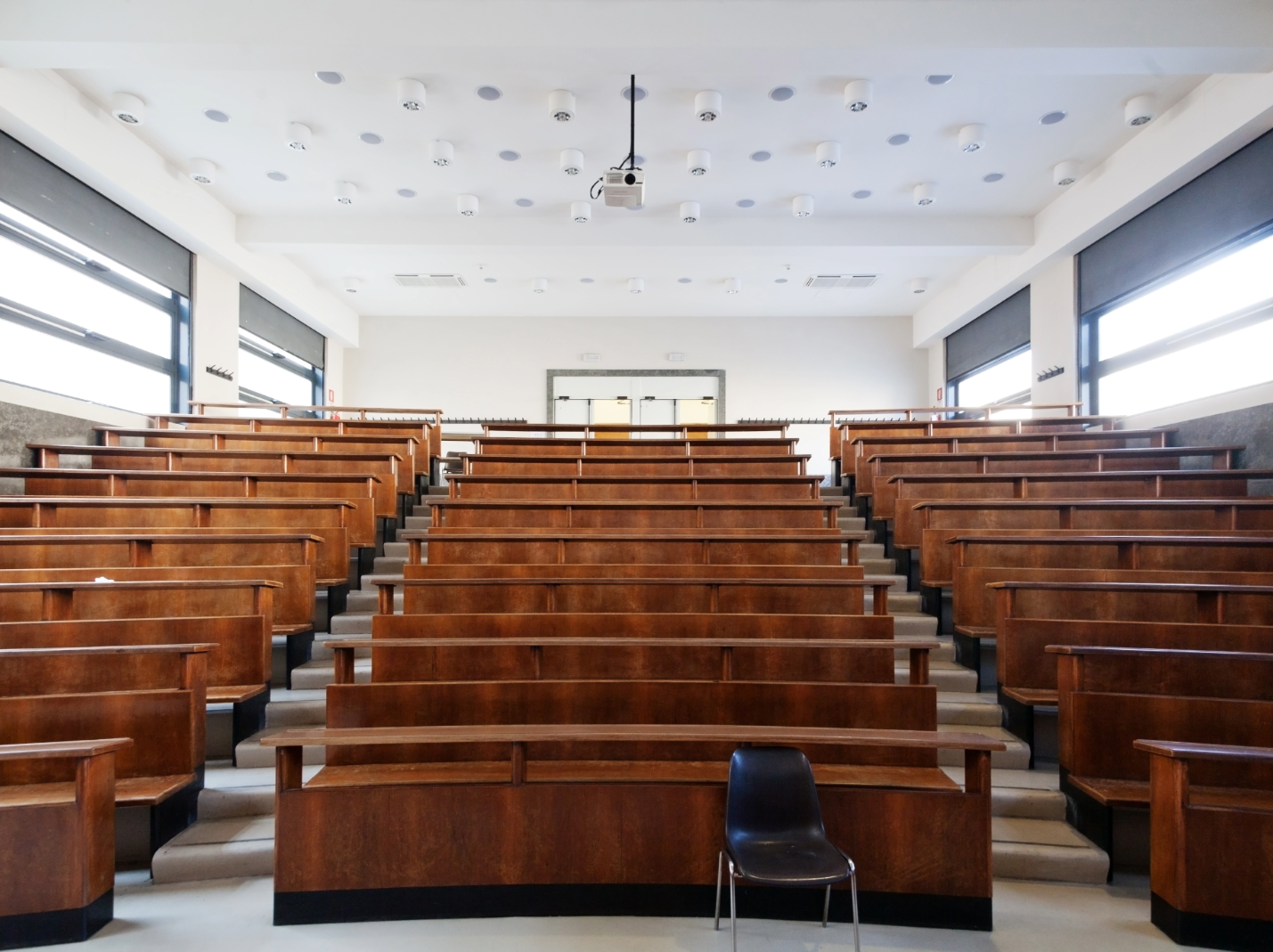
Traditional educational models provide rigid pathways for students to follow. Classrooms teach students to solve problems conventionally and focus on achieving a standard outcome rather than emphasizing innovative methods. Furthermore, students are encouraged to focus on getting the answer right rather than exploring how critical thinking and problem-solving evolve the process. This leads to a system where grades are based on the number of correct vs. incorrect answers.
While distinguishing right from wrong is still critical to academic success, today’s classroom needs to be more flexible. Students should be taught a variety of different methods to find solutions.
Traditional models are also heavily underfunded in terms of teacher training, tools, and technology infrastructure, and this has been the trend for some time. For example, in 2013, Texas enacted budget cuts that reduced the number of summer school intervention sites from 17 to 5 for students who failed state exams, resulting in higher rates of students unable to graduate. More recently, in 2023, New York City schools faced a $649 million budget cut, which reduced K-12 teaching jobs by 4,000, removed technology infrastructure from classrooms, and increased classroom sizes.
A New Generation of Students and a Shifting Workplace are Ushering in New Education Needs
While the millennial generation actively witnessed the transition from an interpersonal world to one that is more technology-dependent, Gen Z was born at the tail end of that transition. Because of this, support and investment in classroom teaching models lag far behind the rapid technological growth in Gen Z’s daily lives.
Furthermore, Gen Alpha is the first generation to have been born directly into our heavily technology-dependent world, and they learned how to use the internet before they even learned traditional soft skills. They were also born during a time when every company began adopting and integrating technology into its business. By the time Gen Alpha joins the workforce, technology will have advanced significantly beyond this, and artificial intelligence (AI) will most likely be an integral part of daily life.
While K-12 education should still depend on an interpersonal component—teachers guiding their instruction—Gen Alpha needs platforms, learning pathways, and project-based learning that integrate the latest technology. This streamlines how their learning experience will ultimately blend with their adult life.
[RELATED: Higher Education Can Survive Its Challenges, and AI Can Help, Says Academic Strategist]
However, technology comes with the risk of losing soft skills—strong presentation, communication, and social skills. Therefore, today’s curriculum needs to blend the use of technology to problem-solve with the development of strong interpersonal skills. This teaches students how to solve problems and present them effectively.
Teachers also need intense training to leverage the tools that Learning Management System (LMS) platforms provide. The tools for personalized learning are available, with platforms such as Moodle, Canvas, Schoology, and Blackboard Learn, but adoption and use are inconsistent, with low usage across many of them. For example, a 2024 study of Moodle usage showed that 41.5 percent of teachers with access to Moodle through their schools did not receive formal training, therefore discouraging use.
Building the Future Workforce
Adaptability and digital fluency have become critical for success in the workforce. Many adults are resistant to change, making change management one of the most difficult workplace challenges today. However, having grown up in a rapidly changing world, the next generation will be more resilient to change, a valuable skill for their future careers.
Growing Dependence on Technology
Technology used to be reserved for high-level cases or specific jobs. However, in the last 20 years, it has increasingly become a daily part of our lives and work across all industries. Today’s kids use more technology, much younger, and to a greater degree than previous generations. Because of this, kids must learn about digital citizenship, social good, and how to leverage the right technology to be more effective and efficient. Before a child accesses social media for the first time, it is important to teach that child how to address adversity or negative behaviors in general. When that child becomes a user, their education must continue with how to use content to learn and express creativity, but also how to separate truth vs. fiction in the content they see. Teaching students digital fluency begins at a young age, even in early education.
How Parents, Educators, and Employers Can Prepare the Future Workforce
Parents and educators play a strong role in shaping how children interact with technology, engage with others, and build resilience to change. Children can participate in summer camps and after school activities to build both technical and interpersonal skills. Parents can be proactive in monitoring and guiding how technology is used and not used in the household. When children problem solve or are confronted with a personal issue, it is important to have an open conversation and encourage solving issues with a positive and productive mindset. Parents and educators can also guide kids through projects and problem solving by encouraging them to ask the question “How should we approach this?” vs. “What is the right answer?”
Beyond this, employers can ensure that managers and leadership provide a flexible coaching environment so that students entering the workforce can learn how to translate their formal education to applicable workplace skills. More often than not, expectations are not conveyed clearly, and more importantly, how to deliver on those expectations are not clearly defined.
[RELATED: The Missing Puzzle Piece of Higher Education]
Communication is from the top down. With each generation entering the workforce with a different set of skills, managers and leadership will benefit from keeping those differences in mind as they adapt their coaching tactics and communication to help newer employees excel.
Companies can prepare for the next generation of workers by first understanding what motivates Gen Alpha the most and what matters to them the most. While companies cannot pivot as quickly as individuals can, showing Gen Alpha that they understand their motives and needs is a strong first step. Companies have larger strategic goals to achieve. They must ensure that Gen Alpha can find its place and role in helping companies achieve those goals, beginning with two-way conversations, tactical coaching, and setting expectations.
Final Thoughts
Teaching our children essential technology skills, such as coding and AI, at an early age ensures that they master the critical thinking skills they need to become successful workers. Furthermore, these skills teach students to be creative, modifying, and problem-solving.
The rise of advanced technologies, such as AI, presents unparalleled opportunities to innovate and expand our technological capabilities. By integrating these technologies into our lives, we free ourselves from the constraints of specialized knowledge, allowing us to focus on creativity and problem-solving. To fully leverage these benefits, we must continue to teach our children invaluable tech skills like coding to prepare them to thrive in a future where technology and creativity go hand in hand.
Image by Claudio Gennari on Adobe; Asset ID#: 38963889
