
When the Trump administration issued an executive order to slash Department of Education (ED) funding earlier this year, the left responded with outrage, painting an apocalyptic scenario in which students would lose access to educational resources and critical research funding would be redirected into the pockets of billionaires. As Senator Elizabeth Warren lamented in March, the government “is telling America’s public school kids that their futures don’t matter.” Indeed, just several weeks ago, the Trump administration renewed its efforts to dismantle the ED by proposing to outsource “large pieces of the U.S. Department of Education” to other federal agencies. While I am hesitant to participate in the sort of fearmongering promoted by the left, I am wary of the Trump administration’s sustained war on the ED because, to a more casual observer, the message could not be clearer: the right does not care about education.
It is no secret that conservatives have been wary of higher education for at least the past decade. As of April 2024, the Democratic Party now holds a five-point advantage (51 percent vs. 46 percent) among those with a bachelor’s degree; this gap is even more evident among voters with post-graduate degrees, where Democrats hold a whopping 24-point lead (61 percent vs. 37 percent). While it is tempting to attribute this education gap to “leftist indoctrination” on college campuses—whereby college professors push a one-sided agenda to unknowing 18-year-olds who emerge from American college campuses almost irrevocably radicalized—ideological capture on college campuses does not tell the full story. After all, if conservatives merely objected to the ideological distortions of today’s campuses while still valuing the idea of higher education, we might expect the right to defend a version of higher education free from political skew—or even to flood campuses determined to challenge leftist conformity from within. Instead, mainstream right-wing criticism increasingly targets not just ideological bias but also the very idea of liberal arts education, treating knowledge that does not translate directly into a job as largely useless.
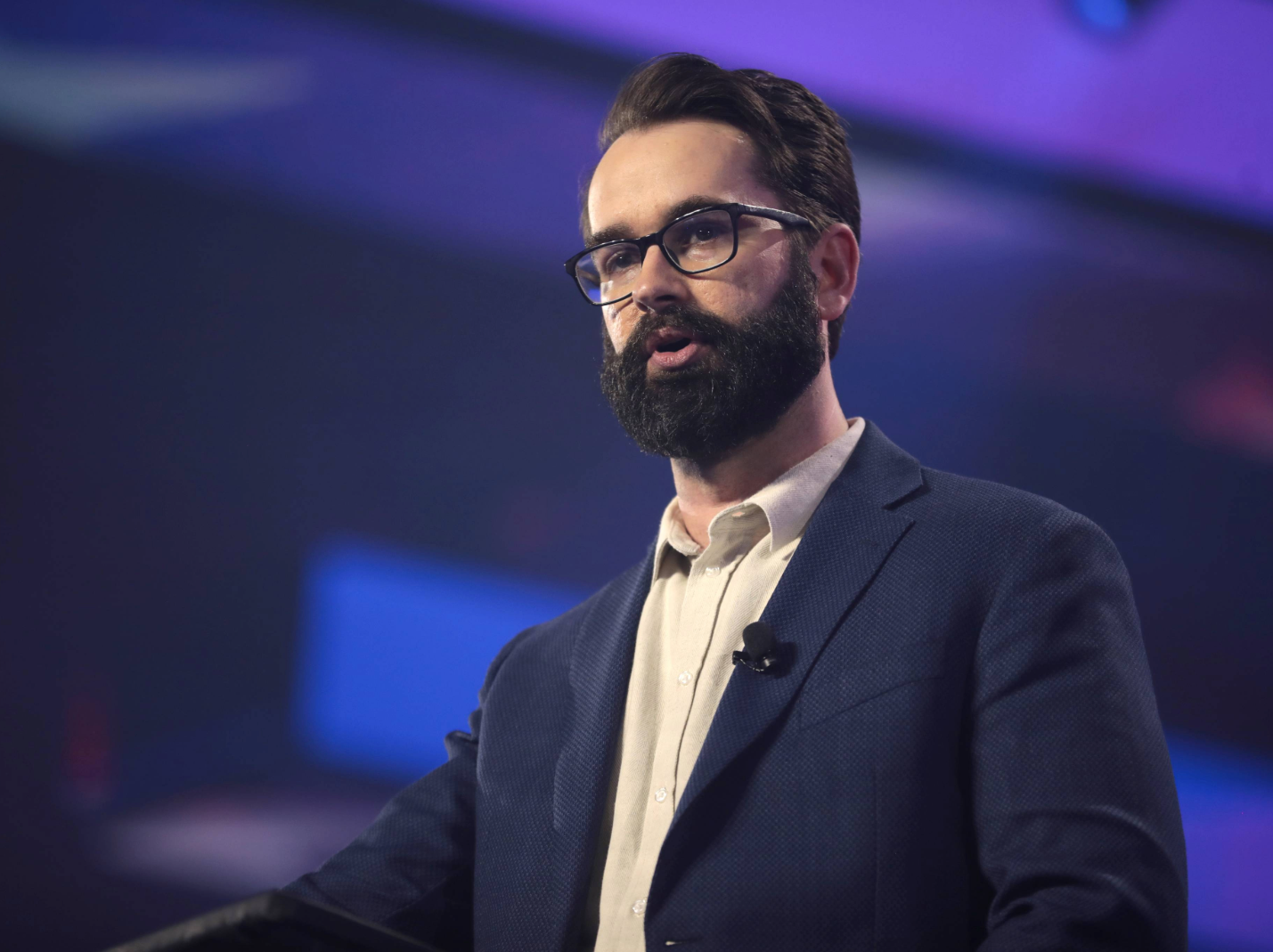
This shift in conservative attitudes toward higher education is reinforced by influential voices on the right who increasingly portray college as unnecessary or even harmful. Prominent commentators such as Ben Shapiro, Matt Walsh, and the late Charlie Kirk have argued that college is a poor investment—useful only for a narrow set of technical fields and largely dispensable for professional success. Shapiro regularly frames college as a debt trap rather than a pathway to opportunity, promoting apprenticeships and self-taught entrepreneurs as evidence that higher education is optional. Walsh has argued outright that students should not attend college at all, while Kirk branded higher education a “scam.” Even conservative children’s programming has echoed this skepticism, with shows like The Tuttle Twins suggesting that college may not be the best path for young viewers.
That retreat is no longer confined to conservative punditry. Surveys now show that most Americans question the value of a four-year degree, reflecting a view—now widely internalized—that college is worthwhile only insofar as it delivers an immediate and predictable job outcome. But this framing misunderstands both the purpose of higher education and how professional success is actually produced.
The highest-earning individuals in our society disproportionately graduate from institutions that follow a liberal arts model, including Ivy League and other top universities—schools that, with a few limited exceptions, do not offer undergraduate majors in fields that conservative pundits claim have a direct correlation to employment, such as accounting or data science. Graduates from these institutions overwhelmingly excel in finance and law, yet at the undergraduate level they typically did not major in finance or law; they studied economics and political science. Similarly, matriculate at Yale or Columbia with the goal of becoming a lawyer, and you will spend four years studying the history of government rather than learning how to write a brief or negotiate a settlement.
The rationale behind a liberal arts education is that the most intelligent, most successful people in our society are not prepared to execute particular tasks—for anyone can be taught to perform any role at any entry-level job—but are instead prepared to enter our society as strong critical thinkers. This is why many of my colleagues in the English department at Columbia went on to secure lucrative jobs in law or consulting—they were not studying English literature to become prepared to talk about literature in the future—they were studying literature to teach their brains to think critically about the world around them. Ivy League schools do not have accounting or data science departments, not because these majors aren’t useful, but because the strongest professionals in these fields succeed by bearing general knowledge rather than by executing specific skills.
Critics such as Walsh would have you believe that majors like political science are useless. If that were true, it would be difficult to explain why so many successful lawyers and executives hold undergraduate degrees in political science, economics, history, English, or psychology. These fields do not prepare students for a single profession. They cultivate habits of reasoning, analysis, and judgment that carry across careers.
The point, then, is not that a college degree automatically guarantees success. Rather, long-term professional stability tends to favor those who have developed strong habits of reasoning, judgment, and intellectual adaptability—what social scientists often describe as general cognitive ability. A liberal arts education is designed around this goal. By engaging students with complex texts, abstract ideas, and competing arguments, it prepares them to adapt, learn, and exercise judgment in fields that may not yet even exist.
The divide over higher education stems less from ideology than from how its purpose is understood. Conservatives increasingly approach college in practical terms, viewing it primarily as a means to secure employment. Liberals, by contrast, are more inclined to defend college in abstract terms, as a place for the pursuit of knowledge. On this point, the latter view more closely aligns with the university’s historic purpose. College has never existed simply to train workers, but to educate the general populace—to form citizens capable of grappling with complex ideas and translating them into innovation that benefits society as a whole.
It is lamentable that the left has turned a noble idea—first articulated by Matthew Arnold, who argued that education should form “citizens of the world,” steeped in culture, literature, art, and society—into an ideological battleground. But it is equally lamentable that conservatives, in response, have turned away from the very idea of a liberal arts education, an education that has guided the development of Western civilization since the ancient Greek polis. If we are to rescue ourselves from a slide into anti-intellectualism, the task of conservatives—as inheritors of that tradition—is not to dismiss higher education, but to defend it as one of the West’s highest achievements.
If we continue to reduce education to a crude cost-benefit calculation, we will lose not only our universities but the intellectual inheritance they were built to protect. Conservatives once understood this better than anyone. It is not too late to remember.
Follow Liza Libes on X.
Image of Matt Walsh by Gage Skidmore on Wikimedia Commons