

Each year, the College Board releases a Trends in College Pricing and Student Aid report, an invaluable resource for analysts and policymakers. Here are highlights from this year’s report, with an emphasis on findings that run counter to the conventional wisdom.
There were some large changes in federal aid over the past year. In particular:
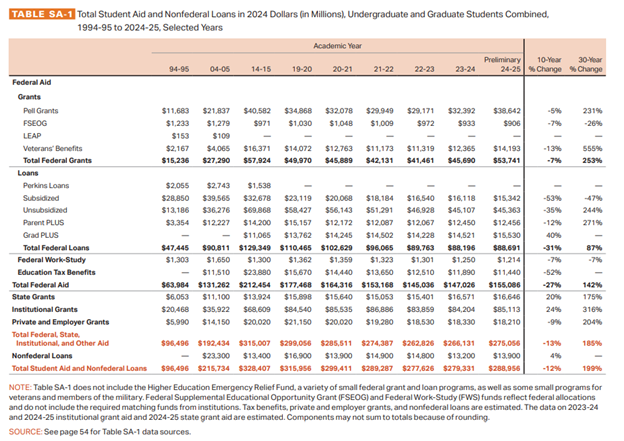
- Total federal aid increased by $8 billion to $155 billion.
- Pell Grants accounted for most of this change, increasing by $6 billion.
- Veterans’ benefits also increased by $2 billion.
- Loan volume didn’t change much.
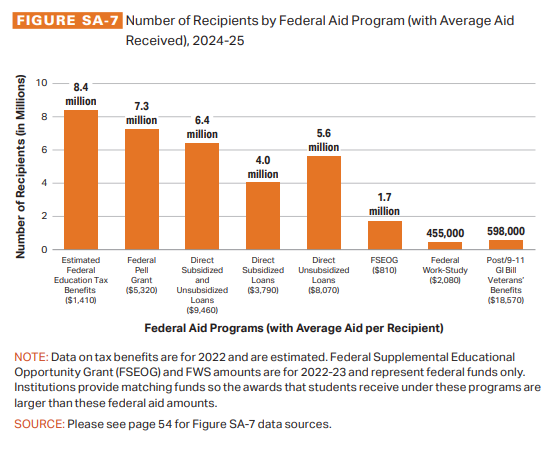
- Tax benefits and Pell Grants are the most common types of aid.
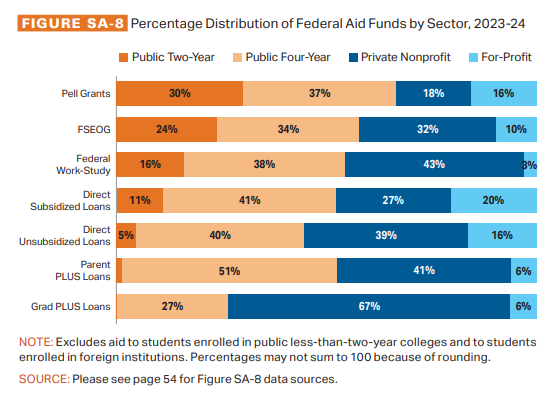
- The private nonprofit sector will feel the elimination of GradPLUS loans the most.
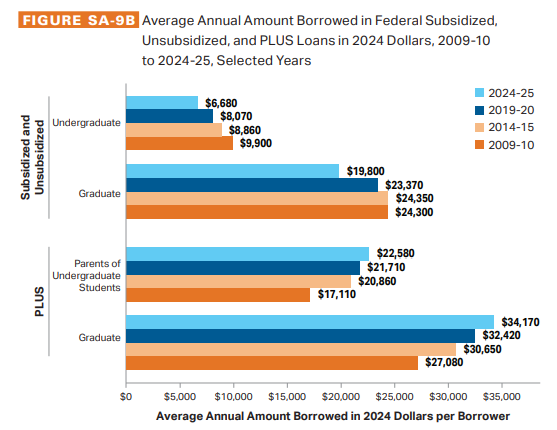
- Undergraduates have been borrowing less over time, whereas graduate students have been borrowing more.
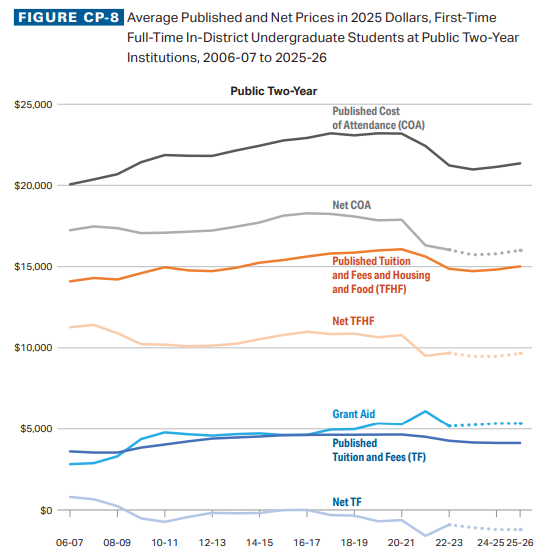
- We’ve had free community college—on average—for around 17 years now. Note the Net TF line below, which shows net tuition and fees after accounting for grant aid.
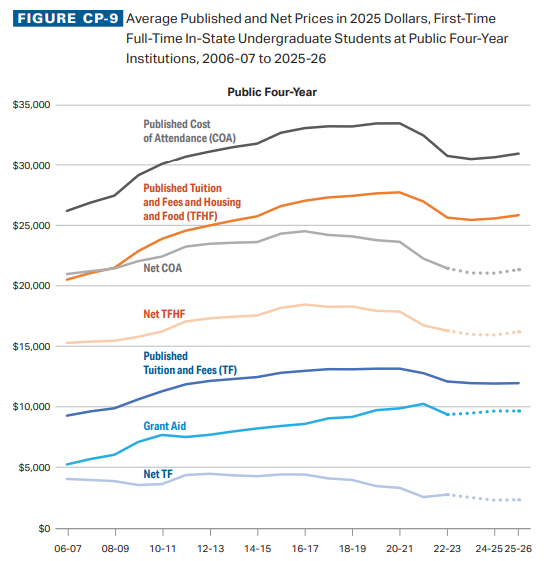
- Net tuition, which accounts for grant aid, continues to fall at four-year public colleges. This figure peaked at $4,400 in 2015-16 and has since fallen to $2,300.
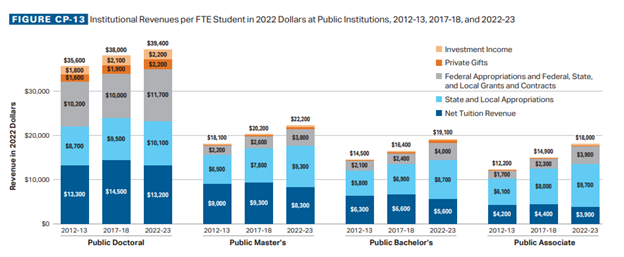
- Community colleges have comparable revenue to most other types of colleges. The only type of college that stands out as having dramatically more revenue than other types are public doctoral colleges.
Follow Andrew Gillen on X.
All graphs: Source: Ma, Jennifer, Matea Pender, and Xiaowen Hu (2025). Trends in College Pricing and Student Aid 2025, New York: College Board. © 2025 College Board.
Cover image by StockPick on Adobe; Asset ID#: 1004256631